
The Chapel building
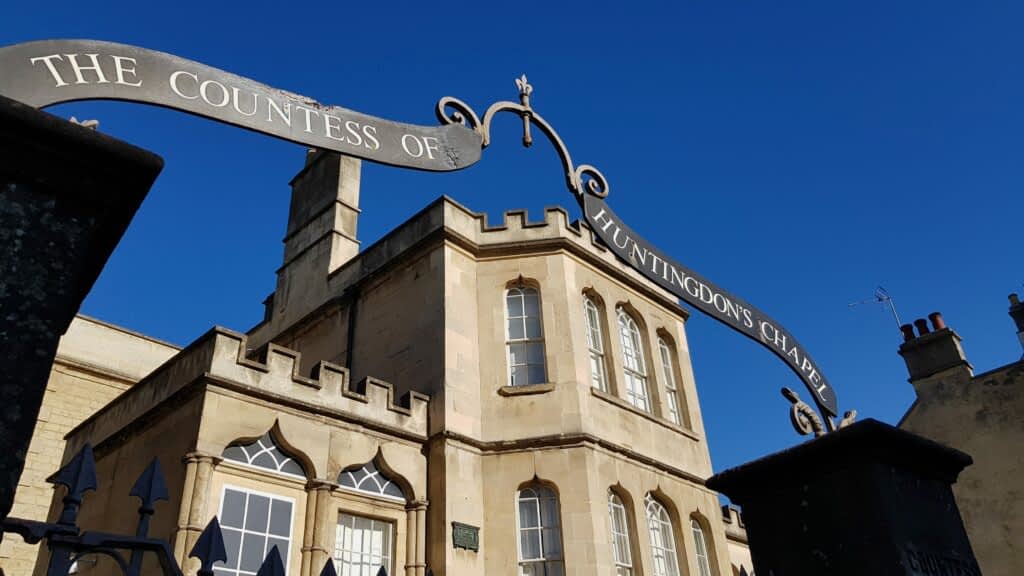
The Museum of Bath Architecture is housed in the Countess of Huntingdon’s Chapel, built in 1765 for Selina Hastings, Countess of Huntingdon.
The Chapel building is an example of the Gothic Revival, which became an increasingly popular style in British architecture in the Georgian period. The style reflected a desire to find an alternative to Classicism, inspired by ancient Greece and Rome. Initially the Gothic Revival had been mostly explored in buildings found in gardens of country houses, often in the form of Gothic cottages, fake ruins or sham castles. That began to change when Horace Walpole completed his house at Strawberry Hill in Twickenham in 1765, the same year the Chapel was built here in Bath.
The Chapel design
The Countess was a friend of Horace Walpole, and the design of the Bath chapel was probably influenced by Strawberry Hill. Walpole visited the Chapel in Bath and gave his opinion of the building; “[it] is very neat, with true Gothic windows”. The front facade of the building features windows with ogee-arched heads and a battlemented roofline, both key features of the Gothic style.
The Chapel itself sits at the back of the building, a large double-height space with tall gothic arched windows along both sides. The front of the building facing the street is smaller, and more domestic looking in scale. This is mainly due to the fact that when it was built non-conformist chapels (not part of the Church of England) were only allowed if they were attached to a private house.
We don’t know who designed the Chapel. However, it was most likely built by John Case, who had constructed other chapels for the Countess.
The dominance of Classicism in Bath meant that very few Georgian Gothic Revival buildings were ever constructed here. In the 19th century several churches and school buildings infused with Gothic forms and decoration were built, but the Chapel is the only surviving Gothic Revival building from the 18th century in the city.
The Countess of Huntingdon
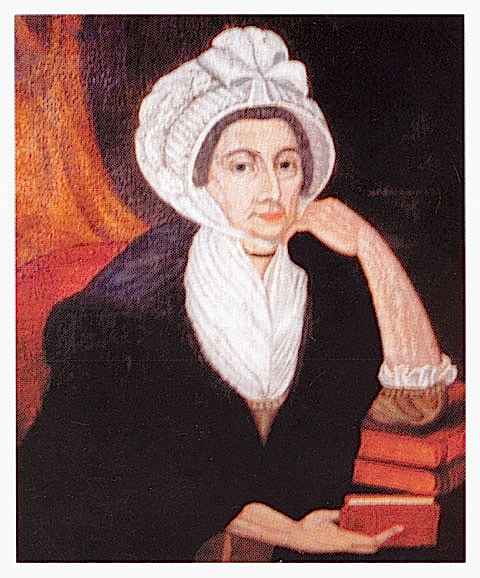
Selina Hastings, the Countess of Huntingdon built many chapels across the country, to spread her form of Methodist preaching, known as The Countess of Huntingdon’s Connexion.
The first chapel was built in Brighton in 1761, then Bath in 1765 and Tunbridge Wells in 1769. By the time of her death in 1791 she had commissioned sixty-three chapels.
Lady Huntingdon saw the social life in Bath in the mid-18th century as one full of decadence and immorality and sought to build a Chapel in the city where she could direct her campaign to spread Methodism. She was an ardent follower first of John Wesley and then of George Whitefield, the latter an itinerant preacher who became her personal chaplain. The aristocratic elite regarded evangelical worship as subversive, and it is impossible to know to what extent Lady Huntingdon’s efforts to spread Methodism were successful in Bath.
The Countess and the transatlantic slave trade
The Countess supported writers who were campaigning for the abolition of the transatlantic trafficking of enslaved African people. Phillis Wheatley dedicated her ‘Poems’ (1773) to the Countess and she was one of the funders of Olaudah Equiano (Gustav Vassa)’s book ‘The Interesting Narrative of Olaudah Equiano or Gustavus Vassa, the African’ (1789). However, the Countess’ involvement with Whitefield also meant she was herself involved with the claiming in ownership the lives of enslaved people. Whitefield had established the Bethesda Orphanage and Academy in Savannah, Georgia in America and had initially also been a campaigner for abolition. He then owned a plantation himself in South Carolina, which on his death was inherited by the Countess, including the stolen lives and labour of 50 enslaved people.
The Chapel and the Museum of Bath Architecture
Through the nineteenth century, the congregation at the Chapel dwindled and it moved from the Huntingdon Connexion to the Trinity Presbyterian Church. The chapel was last used for worship in 1981. By 1983 the building was in urgent need of repair, with the roof in particular at risk from collapse. Bath Preservation Trust (BPT) acquired it, a fundraising campaign was launched and a restoration project undertaken to save the building. The Chapel opened in 1984 as the Huntingdon Heritage Centre for the educational activities of BPT.
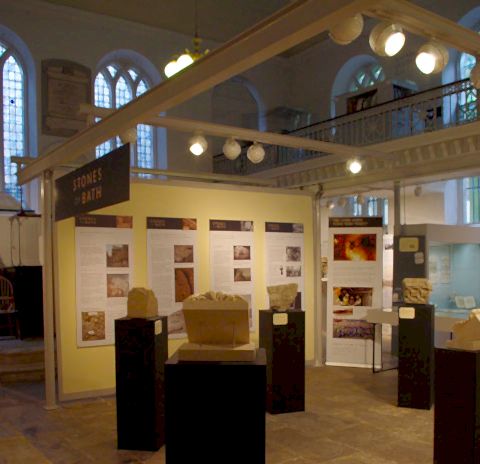
In 1992, following a successful exhibition at the Royal Institute of British Architects in London, the Chapel was fitted out as The Building of Bath museum, the collections began to grow and specific displays were created to show the construction and fitting up of a Georgian townhouse. Since 2016 it has been known as the Museum of Bath Architecture.